
Security - 6 November 2025
Rwanda Calls for Shift From Military Power to Political Dialogue in UN Peacekeeping
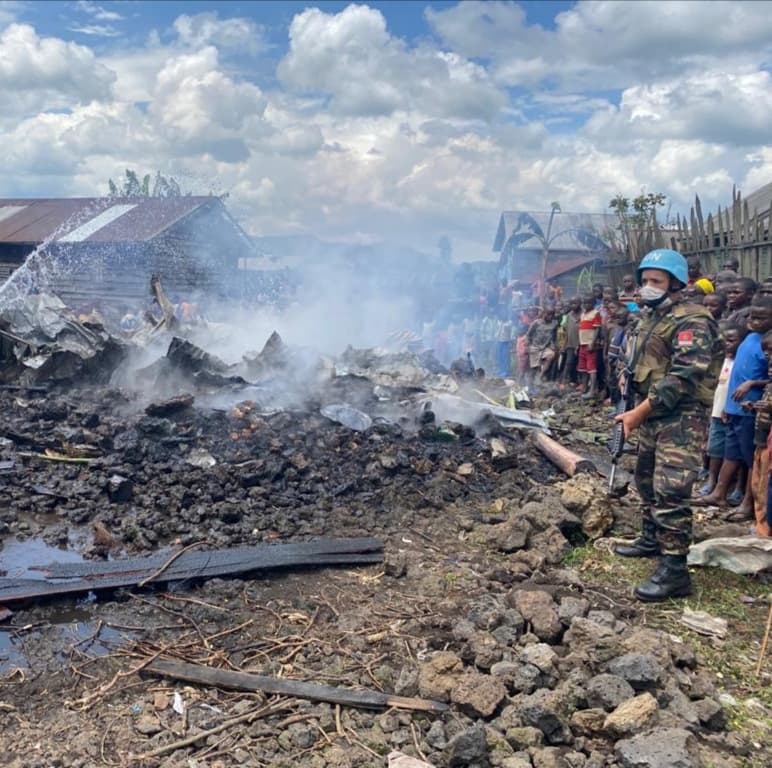
New York, November 6, 2025 - New York - Rwanda has reiterated its long-standing position that effective peacekeeping must prioritize political solutions over military strength. Speaking before the UN General Assembly’s Fourth Committee (Special Political and Decolonization), Colonel Deo Mutabazi, Head of Military Operations at the Rwandan Embassy to the United Nations, argued that durable peace cannot be achieved through force alone.
Col. Mutabazi said the international community has traditionally assumed that protecting civilians requires large and heavily equipped military missions, but this approach has repeatedly proven insufficient.
“We believe that no capacity, technology, or even training can better protect civilians than investing in finding ways to achieve peace through political dialogue,” he said. “This is where many UN peacekeeping missions remain weak.”
He stressed that addressing the root causes of conflict - including mismanagement, corruption, inequality, discrimination, and poverty - is essential for sustainable peace. Military force, he noted, cannot resolve problems that are fundamentally political.
Col. Mutabazi also criticized the mismatch between the mandates of some UN peacekeeping missions and the realities on the ground. At times, he said, mission responsibilities contradict what is actually needed, leading to tensions with host countries and even making peacekeepers targets for local populations.
He warned that such contradictions often emerge when missions attempt to resolve political crises through military means, despite the availability of peaceful alternatives.
“It is time to rethink how peacekeeping mandates are designed,” he added, arguing that decisions dominated by powerful countries have created missions “like Christmas trees” - overloaded with tasks that benefit external actors more than the host nation.
Col. Mutabazi called for stronger collaboration between the UN and regional organizations, saying that troops deployed under continental or regional frameworks have demonstrated their ability to restore stability and create space for peacebuilding.
He also highlighted troubling cases where UN peacekeepers have been drawn into local conflicts or, in some instances, have cooperated with illegal armed groups. To prevent such situations, he said, peacekeeping responsibilities must be clearly aligned with international law.
The Rwandan officer emphasized that one of the most cost-effective approaches to strengthening peace is deep community engagement. Programs that link peacekeepers with local leaders and residents - especially through activities in health, sanitation, environmental protection, and school rehabilitation - create trust and open channels of communication.
“Our experience has shown that working with communities produces positive results and helps combat misinformation and hate speech,” he said. “It builds genuine relationships between communities, their leaders, and peacekeepers.”
Rwanda’s Defence Forces have long used this model in their peacekeeping deployments, often participating in community activities such as cleaning campaigns, health interventions, and school construction or renovation. According to Mutabazi, these efforts help peacekeepers and local populations “feel like brothers,” strengthening cooperation and security.
Related reading
Security - 31 August 2026
DRC And Congo-Brazzaville Move To De-Escalate Congo River Border Clash
Kinshasa, August 31, 2026 - The DRC and Congo-Brazzaville moved to contain tensions after a fatal August 28 clash between FARDC troops and Congo-Brazzaville forces on the Congo River between Yumbi and Makotimpoko.
By Amina Kabasele - 3 min read
Security - 31 August 2026
Walikale Villages Empty As Fighting Spreads In Eastern DRC
Goma, August 31, 2026 - Multiple villages in the Waloa Loanda groupement of Walikale were emptied as fighting between the army and AFC/M23 forces spread from nearby Masisi and Kalehe zones, deepening humanitarian…
By Amina Kabasele - 3 min read
Security - 31 August 2026
Government Says Army Is Blocking AFC/M23 Expansion In Kivu
Kinshasa, August 31, 2026 - The government said the FARDC was systematically foiling AFC/M23 attempts to occupy additional territory in the Kivus, as fighting continued on multiple fronts.
By Amina Kabasele - 3 min read