
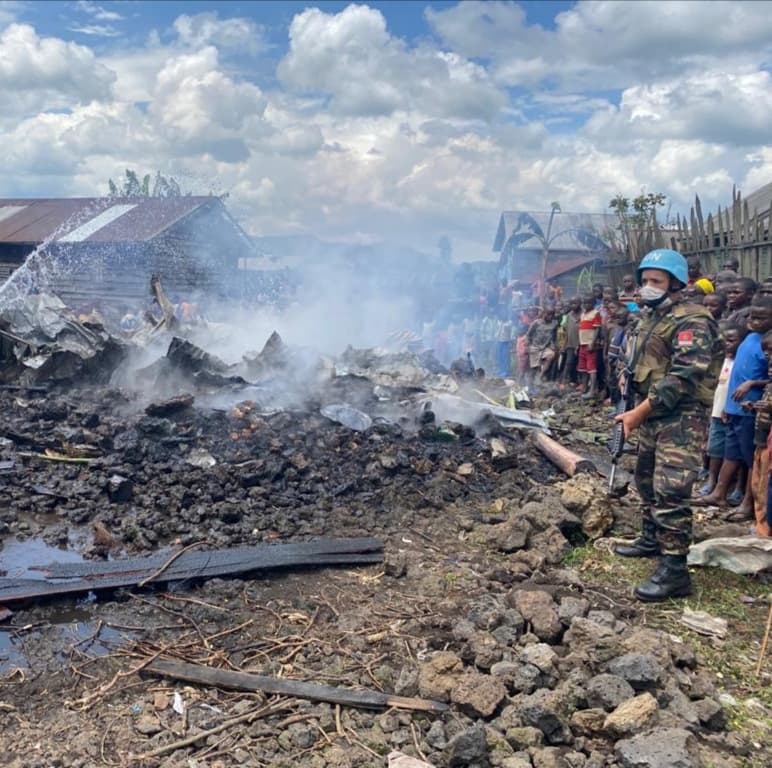
Security - 22 March 2026
Oakland Institute Criticizes Washington Agreement
Kinshasa, March 13, 2026 - The Oakland Institute has sharply criticized the Washington Agreement, arguing that it contains “inherent contradictions” by allegedly rewarding Rwanda despite its continued involvement in the conflict in eastern Democratic Republic of Congo.
In a statement released on March 12, the organization called on the United States administration to take stronger measures to end what it describes as Rwandan aggression through the AFC/M23 rebellion, which it says fuels instability and illicit exploitation of natural resources at the expense of Congolese civilians.
The think tank also deemed U.S. sanctions imposed by the Office of Foreign Assets Control (OFAC) on the Rwandan Defence Forces (RDF) and several senior officials as insufficient, arguing they fail to counter the financial gains derived from the conflict.
According to the report, the RDF has played a decisive role in supporting the M23 rebellion, including in the capture of key areas such as Goma and Bukavu, as well as strategic mining sites. The organization highlights that control over resources-particularly coltan and gold-has enabled the rebels to generate significant revenues, including an estimated $800,000 per month from coltan taxation and up to $2 billion in gold exports in 2025.
The Oakland Institute further notes that Rwanda continues to receive substantial international financial support, including U.S. bilateral aid and major funding from the World Bank, raising concerns about policy contradictions. It points to infrastructure contracts allegedly linked to entities associated with the RDF, suggesting a nexus between military influence and economic interests.
Frédéric Mousseau, policy director at the institute, argued that Rwanda’s actions undermine the credibility of the Washington Agreement. “Rwanda’s violations and continued presence in the DRC highlight the contradictions of a so-called peace agreement that effectively grants access to Congolese resources while failing to ensure accountability,” he said, warning that such an approach cannot lead to lasting peace.
The report echoes earlier findings published in the institute’s study “Shafted: The Race for Critical Minerals in the DRC,” which cautioned that diplomatic initiatives may be used to advance resource interests under the guise of peacebuilding.
Diverging Positions
In response to the sanctions, Rwanda rejected the measures as “unilateral” and “distorting the facts”, arguing they unfairly target one side of the conflict. Kigali accused Kinshasa of violating ceasefire agreements through drone strikes and military offensives, and reiterated concerns over the presence of armed groups, including the FDLR, alongside Congolese forces.
On its part, the Congolese government welcomed the sanctions as a “clear signal” in support of sovereignty and territorial integrity, stressing the need for consistency between diplomatic commitments and realities on the ground. Authorities in Kinshasa maintain that ending support for armed groups and respecting international law are essential to stabilizing eastern DRC.
Fragile Diplomatic Progress
Despite ongoing diplomatic efforts, including the Washington and Doha processes supported by the African Union, progress remains limited on the ground. Persistent tensions between Kinshasa and Kigali, combined with renewed clashes in North and South Kivu, continue to undermine hopes for a sustainable resolution to the conflict.
The Oakland Institute’s critique adds to growing international debate over whether current diplomatic frameworks can effectively address the root causes of the conflict or risk entrenching existing power dynamics in the region.
Related reading
Security - 31 August 2026
DRC And Congo-Brazzaville Move To De-Escalate Congo River Border Clash
Kinshasa, August 31, 2026 - The DRC and Congo-Brazzaville moved to contain tensions after a fatal August 28 clash between FARDC troops and Congo-Brazzaville forces on the Congo River between Yumbi and Makotimpoko.
By Amina Kabasele - 3 min read
Security - 31 August 2026
Walikale Villages Empty As Fighting Spreads In Eastern DRC
Goma, August 31, 2026 - Multiple villages in the Waloa Loanda groupement of Walikale were emptied as fighting between the army and AFC/M23 forces spread from nearby Masisi and Kalehe zones, deepening humanitarian…
By Amina Kabasele - 3 min read
Security - 31 August 2026
Government Says Army Is Blocking AFC/M23 Expansion In Kivu
Kinshasa, August 31, 2026 - The government said the FARDC was systematically foiling AFC/M23 attempts to occupy additional territory in the Kivus, as fighting continued on multiple fronts.
By Amina Kabasele - 3 min read