
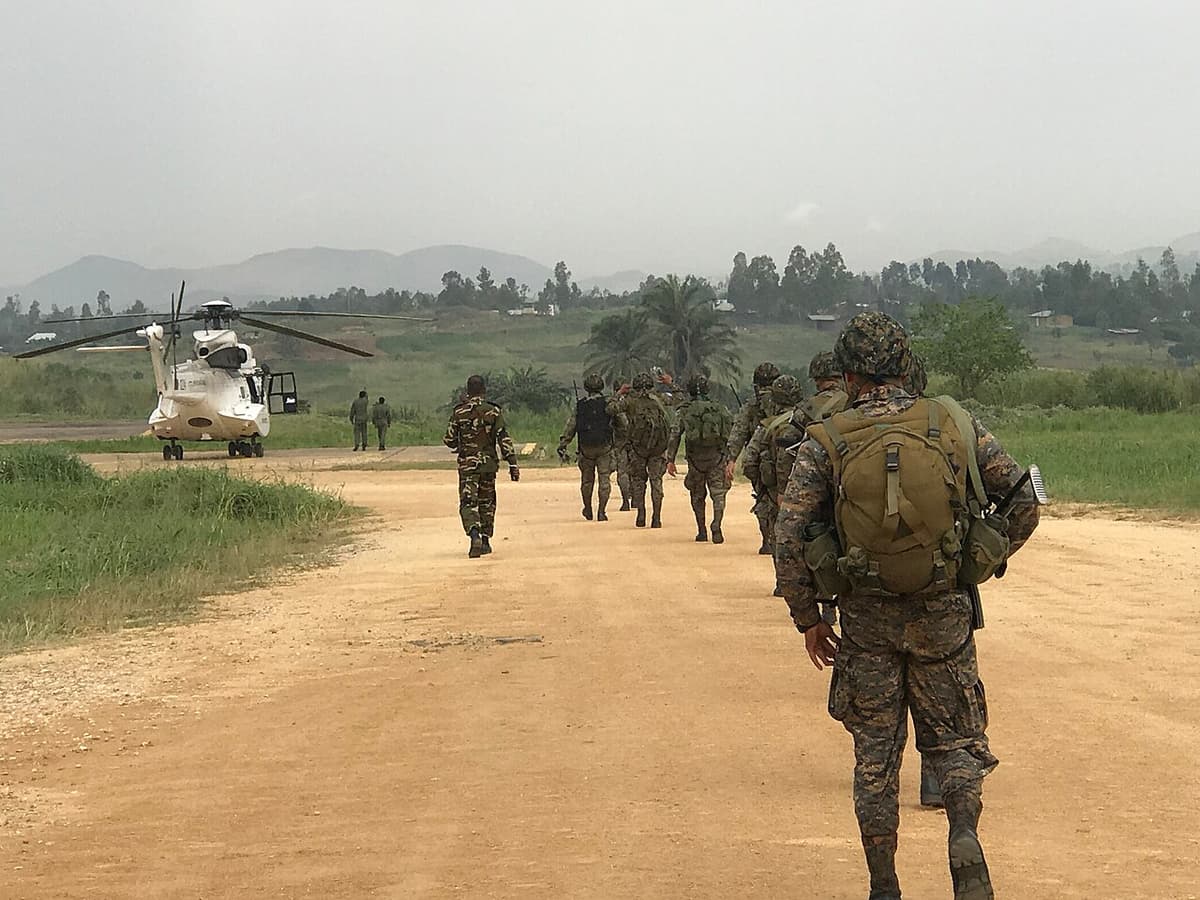
Security - 9 July 2026
Former FDLR Fighter Reveals Group’s Influence in Eastern DRC Governance
KIGALI, July 9, 2026 - Former members of the Democratic Forces for the Liberation of Rwanda (FDLR) have revealed details about alleged abuses within the armed group, including claims that its fighters have influenced local political processes in parts of eastern Democratic Republic of Congo.
The testimonies were presented on June 12, 2026, at the Mutobo Demobilization Center during a discussion on the 1994 Genocide against the Tutsi. The event, organized by the Unity Club Intwararumuri Association, focused on accounts from former members of armed groups operating in eastern DRC, particularly the FDLR.
Col. (Rtd) Augustin Nshimiyimana, also known as Bora Manassé, a former FDLR member, said he fled Rwanda in 1994 and joined armed groups in the DRC, where he later worked in the group’s intelligence structures.
He said the extremist ideology within the FDLR remains difficult to eliminate because it was transferred from Rwanda into the DRC, where the group established networks and continued its activities.
Nshimiyimana also claimed that the FDLR has become deeply embedded in some local governance structures in eastern DRC, particularly in South Kivu, where he alleged that the group has influenced the selection of political representatives.
According to his testimony, FDLR commanders operating near polling areas have allegedly used their influence to mobilize voters and support preferred candidates during elections, resulting in the group gaining representation in provincial and national institutions.
The former fighter argued that eliminating the FDLR requires more than military action, saying the group has developed political and social networks beyond its armed structures.
The FDLR, which emerged after the 1994 Genocide against the Tutsi and is based mainly in eastern DRC, has remained a major security concern in the Great Lakes region. The group has been accused of maintaining extremist networks, spreading hate ideology, and contributing to instability in eastern Congo.
The military wing of the FDLR, known as FDLR-FOCA, is reportedly led by Pacifique Ntawunga, also known as General Omega. Other senior figures include Maj. Gen. Cyprien Uzabakiriho, known as Ave Maria, who previously commanded the group.
The intelligence branch (G2) is reportedly headed by Brig. Gen. Sébastien Uwimbabazi, also known as Nyembo Abdallah, who coordinates operations in areas including Masisi and Walikale. The military operations branch (G3) is led by Brig. Gen. Lucien Nzabanita, while the Special Operations Command (CRAP) is commanded by Col. Pierre-Célestin Rurakabije, also known as Simba Guillaume.
Security assessments indicate that by June 2025, the FDLR’s armed strength was estimated at between 7,000 and 10,000 fighters, maintaining its presence as one of the longstanding armed groups operating in eastern DRC.
Related reading
Security - 31 August 2026
DRC And Congo-Brazzaville Move To De-Escalate Congo River Border Clash
Kinshasa, August 31, 2026 - The DRC and Congo-Brazzaville moved to contain tensions after a fatal August 28 clash between FARDC troops and Congo-Brazzaville forces on the Congo River between Yumbi and Makotimpoko.
By Amina Kabasele - 3 min read
Security - 31 August 2026
Walikale Villages Empty As Fighting Spreads In Eastern DRC
Goma, August 31, 2026 - Multiple villages in the Waloa Loanda groupement of Walikale were emptied as fighting between the army and AFC/M23 forces spread from nearby Masisi and Kalehe zones, deepening humanitarian…
By Amina Kabasele - 3 min read
Security - 31 August 2026
Government Says Army Is Blocking AFC/M23 Expansion In Kivu
Kinshasa, August 31, 2026 - The government said the FARDC was systematically foiling AFC/M23 attempts to occupy additional territory in the Kivus, as fighting continued on multiple fronts.
By Amina Kabasele - 3 min read