
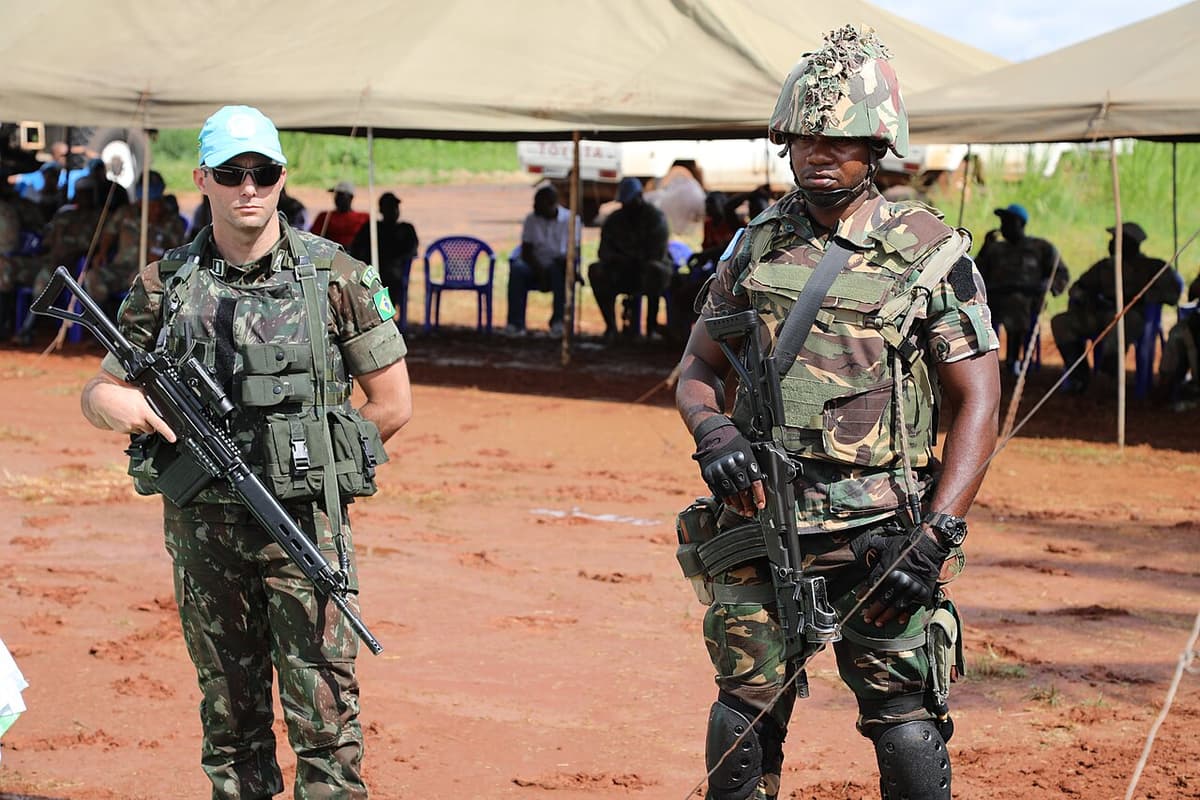
Security - 11 October 2025
Ambassador Ngoga Urges UN to Respect Rwanda-DRC Peace Framework
New York, October 13, 2025 - Rwanda’s Ambassador to the United Nations, Martin Ngoga, has called on UN Security Council member states to refrain from interfering in the ongoing peace process between Rwanda and the Democratic Republic of the Congo (DRC), emphasizing that the two nations have already defined a cooperative framework to end years of conflict.
Speaking during a UN Security Council session on the security situation in the African Great Lakes Region, Ambassador Ngoga expressed concern that some member states appear to have limited or inaccurate information about the progress being made under the Washington Agreement, a bilateral peace accord signed in June 2025 with the support of the United States.
Ngoga stressed that external interference risks undermining regional peace efforts, particularly when based on misinformation or political bias. He specifically requested that the U.S. Ambassador to the UN brief the Security Council on the steps already taken under the Washington Agreement, to ensure that all nations share a factual and coordinated understanding of developments.
“The Republic of Rwanda and the DRC have agreed on how to resolve our differences,” Ngoga said.“We ask this Council to support this process. Rwanda will honor its commitments through the Washington Accords and will continue to support the Doha process.”
The Doha process, facilitated by the State of Qatar, runs parallel to the Washington Agreement and focuses on consolidating ceasefire arrangements and political dialogue between the DRC government and the AFC/M23 coalition.
Ambassador Ngoga commended Qatar and the African Union (AU) for their constructive roles in promoting dialogue and stability in the Great Lakes region. However, he warned that international involvement should be supportive, not substitutive, of African-led peace mechanisms.
“We want the contribution of this Council,” he told members.“But we also want you to give us the opportunity to fully respect these agreements - and to avoid behaving in a way that would complicate or undermine the process. What is needed is reconciliation.”
Ngoga’s remarks reflect Rwanda’s consistent stance that peace must be owned and driven by regional stakeholders, with the UN’s role focused on support and coordination, not direct intervention.
The Washington Accords, signed on June 27, 2025, outline a comprehensive framework to restore security, cooperation, and trust between Rwanda and the DRC after years of mutual accusations and armed confrontations.Its main provisions include:
Elimination of the FDLR - Both countries commit to neutralizing the FDLR (Democratic Forces for the Liberation of Rwanda), a militia that Rwanda classifies as a terrorist organization responsible for cross-border attacks.
Dismantling Rwanda’s defensive security measures - Rwanda will gradually reduce its border defense deployments once the FDLR is disbanded and the DRC ensures that no hostile forces operate from its territory.
Repatriation of refugees - Rwanda and the DRC agreed to facilitate the voluntary return of refugees in both directions, under international supervision.
Economic cooperation - The two countries will sign a joint economic agreement to promote cross-border trade, infrastructure development, and investment benefiting citizens on both sides.
Establishment of a Joint Security Cooperation Mechanism (JSCM) - This body, headquartered in Washington, is tasked with monitoring compliance with the agreement and overseeing demobilization and reintegration programs.
Following the signing of the accord, the DRC Armed Forces (FARDC) called on FDLR fighters to surrender to the government or the UN peacekeeping mission (MONUSCO), warning that those who refuse will face military operations in accordance with the Washington provisions.
Once the FDLR disarmament campaign begins in earnest, Rwanda is expected to start withdrawing its enhanced security measures, a process that will be supervised by the JSCM.
Despite the cautious optimism expressed by both sides, tensions remain high, particularly due to ongoing mistrust and sporadic violations of ceasefire arrangements in eastern Congo. Analysts note that Ngoga’s statement was a diplomatic reminder that Rwanda expects UN member states to support existing peace frameworks, not introduce parallel or conflicting initiatives that could reignite tensions.
Related reading
Security - 31 August 2026
DRC And Congo-Brazzaville Move To De-Escalate Congo River Border Clash
Kinshasa, August 31, 2026 - The DRC and Congo-Brazzaville moved to contain tensions after a fatal August 28 clash between FARDC troops and Congo-Brazzaville forces on the Congo River between Yumbi and Makotimpoko.
By Amina Kabasele - 3 min read
Security - 31 August 2026
Walikale Villages Empty As Fighting Spreads In Eastern DRC
Goma, August 31, 2026 - Multiple villages in the Waloa Loanda groupement of Walikale were emptied as fighting between the army and AFC/M23 forces spread from nearby Masisi and Kalehe zones, deepening humanitarian…
By Amina Kabasele - 3 min read
Security - 31 August 2026
Government Says Army Is Blocking AFC/M23 Expansion In Kivu
Kinshasa, August 31, 2026 - The government said the FARDC was systematically foiling AFC/M23 attempts to occupy additional territory in the Kivus, as fighting continued on multiple fronts.
By Amina Kabasele - 3 min read