
Security - 24 January 2026
Prof. Tombola Says Lomé Talks Allow Tshisekedi to Evade Previous Agreements
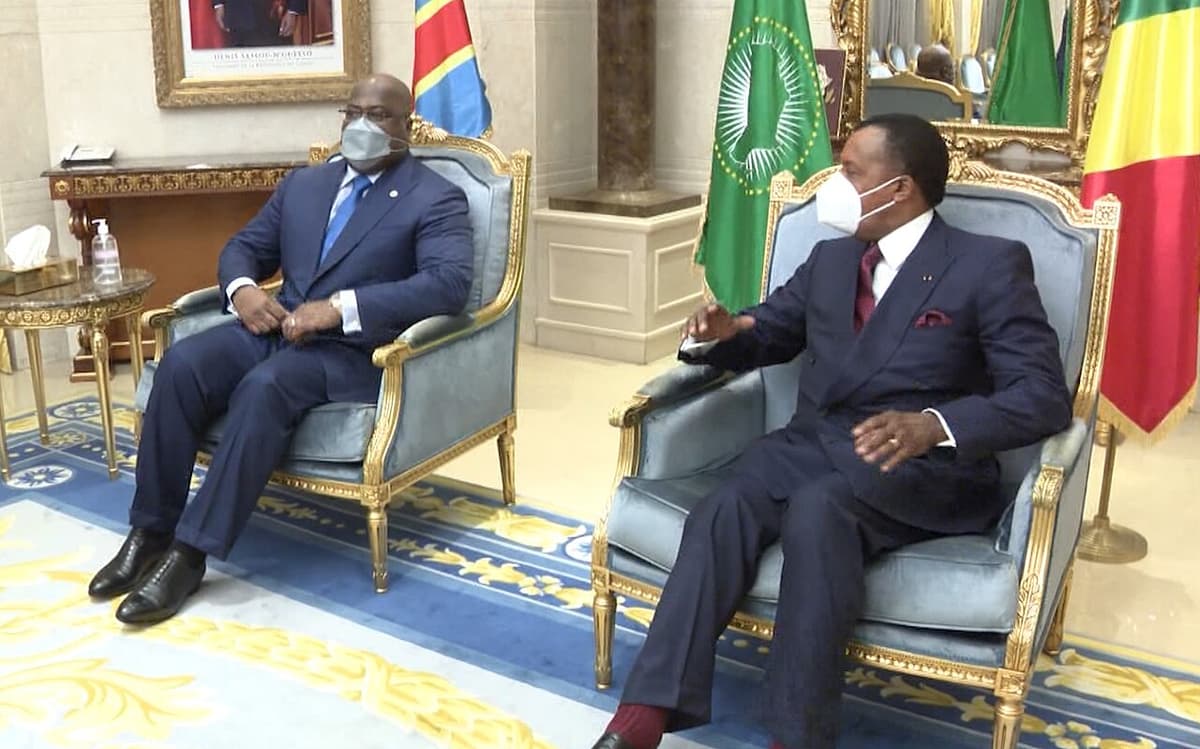
Kinshasa, January 19, 2026 - Researcher and university lecturer Prof. Tombola Gustave has criticized the launch of new peace talks on insecurity in eastern Democratic Republic of the Congo (DRC), arguing that they serve as a way for President Félix Tshisekedi to avoid implementing previously signed agreements.
The talks, held in Lomé, the capital of Togo, on January 17, 2026, aimed to strengthen African responses to insecurity in the DRC and the Great Lakes Region.
They brought together former heads of state from five African countries and were led by President Faure Essozimna Gnassingbé, who currently chairs the African Union (AU), alongside representatives of the East African Community (EAC), the Southern African Development Community (SADC), and the Chairperson of the AU Commission, Mahmoud Ali Youssouf.
In an interview on National Television, Prof. Tombola acknowledged that the involvement of the AU Chairperson could be seen as an African approach to conflict resolution.
However, he noted that the AU already had an established framework addressing insecurity in eastern DRC, and pointed out that President Tshisekedi personally traveled to Togo, indicating that he had requested the talks.
“Tshisekedi went to Lomé, although no one knows exactly what he said there. That is when it was announced that the DRC issue was now in the hands of the AU and that President Faure was the mediator,” Tombola said. “He went and told him, ‘You have taken matters into your own hands.’”
The researcher recalled that peace efforts under Tshisekedi have followed a long and complex trajectory. He said the president initially attempted dialogue with the AFC/M23, which the group rejected, before turning to the EAC and SADC, which deployed troops and launched other initiatives.
He added, “The time came for the EAC and SADC to come together, but Tshisekedi placed Rwanda at the center of the issue, arguing that the problem was not AFC/M23 but Rwanda. This led to two tracks: the AFC/M23 talks in Nairobi and the Rwanda-DRC talks in Luanda, which were later handed over to the AU.”
According to Prof. Tombola, the United States and Qatar later joined the process, culminating in the Washington Agreement, but he said the DRC has implemented it only partially.
“In all this, you wonder whether those who sit at the table truly ignore the problem,” he said. “Is it necessary to move from city to city when the issue is already well known and no decisions are being implemented?”
He argued that the DRC continues to disregard agreements reached in Nairobi, Luanda, and Washington, adding that had they been respected, the crisis would have been resolved. He therefore described the Lomé initiative as “another Tshisekedi maneuver.”
“Tshisekedi is not implementing what was agreed in Washington and Doha, but is instead launching another process to keep people busy,” he said. “It is not because he believes Lomé will bring a solution, but because he is delaying what needs to be implemented.”
Meanwhile, Rwandan Minister of Foreign Affairs Olivier Nduhungirehe stated that peace talks in the Great Lakes Region should build on the steps taken in 2025, when the Rwanda-DRC agreement was signed in Washington.
Related reading
Security - 31 August 2026
DRC And Congo-Brazzaville Move To De-Escalate Congo River Border Clash
Kinshasa, August 31, 2026 - The DRC and Congo-Brazzaville moved to contain tensions after a fatal August 28 clash between FARDC troops and Congo-Brazzaville forces on the Congo River between Yumbi and Makotimpoko.
By Amina Kabasele - 3 min read
Security - 31 August 2026
Walikale Villages Empty As Fighting Spreads In Eastern DRC
Goma, August 31, 2026 - Multiple villages in the Waloa Loanda groupement of Walikale were emptied as fighting between the army and AFC/M23 forces spread from nearby Masisi and Kalehe zones, deepening humanitarian…
By Amina Kabasele - 3 min read
Security - 31 August 2026
Government Says Army Is Blocking AFC/M23 Expansion In Kivu
Kinshasa, August 31, 2026 - The government said the FARDC was systematically foiling AFC/M23 attempts to occupy additional territory in the Kivus, as fighting continued on multiple fronts.
By Amina Kabasele - 3 min read