
Security - 11 July 2026
AFC/M23 Declares End of Fighting in Minembwe After Taking Control of Key Areas
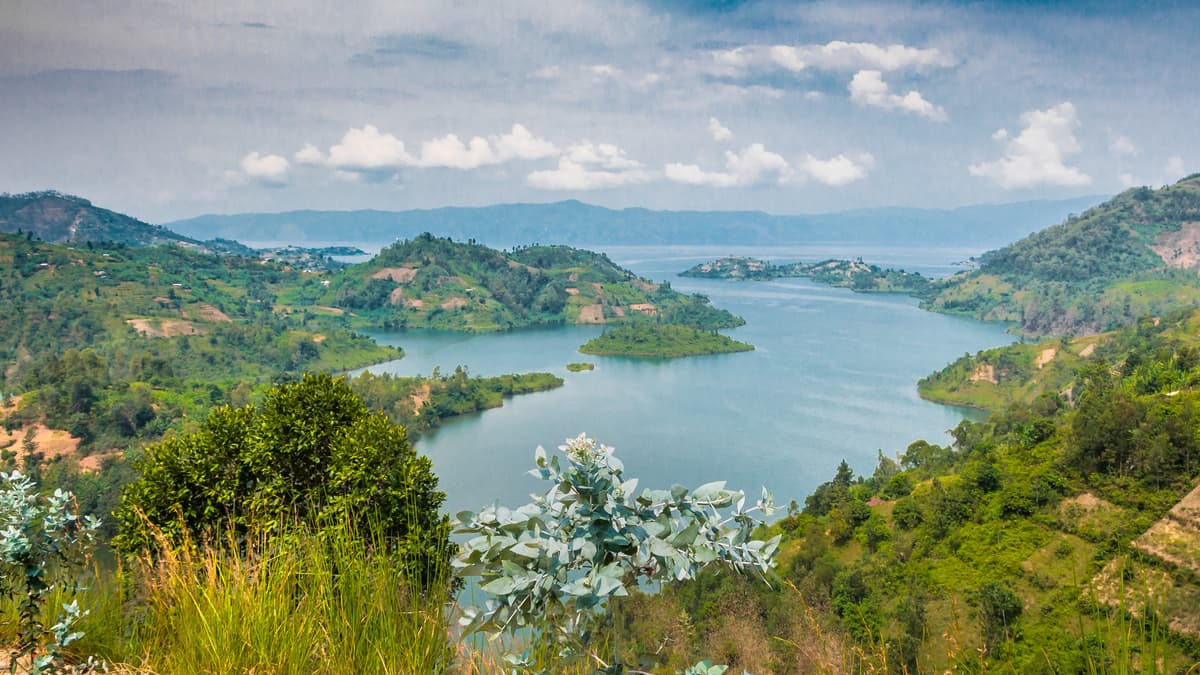
MINEMBWE, July 11, 2026 - The AFC/M23 coalition has declared that fighting in the Minembwe commune of South Kivu has ended, following its reported capture of several strategic areas previously held by forces allied with the Congolese government.
Bertrand Bisimwa, AFC/M23 Deputy Director for Political, Diplomatic and Governance Affairs, delivered the message during a visit to Minembwe, saying that residents would no longer face attacks from government-aligned forces.
The visit followed the coalition’s reported takeover of areas including Point-Zéro, Mikenke, Kalingi, Ilundu, and Rwitsankuku, which had been contested between AFC/M23 and forces supporting the government of the Democratic Republic of Congo.
Bisimwa was accompanied by senior AFC/M23 figures, including Dr. Freddy Kaniki, who oversees economic and financial affairs within the coalition and also leads MRDP Twirwaneho, as well as M23 Deputy Commander-in-Chief Brig. Gen. Bernard Byamungu.
The delegation’s arrival, accompanied by AFC/M23 fighters, was described by local sources as a significant moment for residents who had experienced prolonged insecurity in the area.
On July 8, residents of Minembwe held celebrations marked by songs, traditional dances, and public gatherings. AFC/M23 and Twirwaneho representatives joined the celebrations, wearing military uniforms and participating in the traditional akadiho dance.
Sources from South Kivu said the movement of AFC/M23 forces through Minembwe and surrounding border areas was challenging due to difficult terrain, including mountainous landscapes and dense forest routes.
Addressing residents, Bisimwa said AFC/M23 leaders, including Commander-in-Chief Corneille Nangaa and military commander Gen. Maj. Sultani Makenga, had sent him to announce that the conflict in Minembwe was over.
“Our organization and its leadership sent me to tell you that the war in Minembwe is over,” Bisimwa said, adding that the coalition would not allow further attacks against the population.
He compared the struggle over Minembwe to the biblical story of the Israelites seeking to enter Canaan, saying opponents would not succeed in regaining control of the area.
Bisimwa also accused government-aligned forces of pursuing policies aimed at targeting communities based on ethnicity, saying AFC/M23 and MRDP Twirwaneho had united to oppose what he described as efforts to harm Congolese populations.
The AFC/M23 leadership said it believes attempts to defeat its movement will fail, arguing that similar historical efforts to eliminate communities have been opposed by divine intervention.
The Congolese government has not publicly confirmed the AFC/M23 claims regarding the situation in Minembwe. The area remains part of the broader conflict in eastern DRC, where multiple armed groups and government forces continue to compete for territorial control.
CONCLUSION
The first half of July 2026 reflects a period of continued transformation, strategic engagement, and heightened security awareness for Rwanda, with notable developments across political, economic, social, and regional security spheres.
Political and Diplomatic Positioning
The period was marked by Rwanda’s 32nd Liberation Day commemorations, which served as both a national reflection on the country’s post-genocide reconstruction journey and an opportunity to highlight achievements in unity, governance, and self-reliance. Rwanda’s international profile was further strengthened by President Paul Kagame’s appointment as Chair of the newly established United Nations AI for Good Global Commission, reinforcing the country’s ambition to play a greater role in global technology and governance discussions.
Diplomatic engagement also remained active, with Rwanda deepening partnerships through cooperation agreements in science, education, security, and development. Bilateral relations were reinforced through engagements with countries including Israel, Poland, China, Russia, Zambia, and Mozambique, reflecting Kigali’s continued efforts to expand strategic partnerships beyond traditional areas of cooperation.
Economic Growth and Development Challenges
Economically, Rwanda maintained strong momentum, with the economy recording 10% growth in the first quarter of 2026 and private investment projects worth nearly $8 billion registered between 2024 and mid-2026. These investments are expected to contribute significantly to job creation and support Rwanda’s long-term development objectives.
The government continued to prioritize economic resilience through measures aimed at strengthening trade, agriculture, energy security, and export competitiveness, including new regional cooperation agreements and improved quality-control systems. At the same time, discussions around wage reforms highlighted the government’s cautious approach, emphasizing the need to balance workers’ welfare with business sustainability and employment preservation.
Social Progress and Institutional Development
In the social sector, Rwanda continued to record major improvements in human development indicators, including a significant reduction in child mortality over the past decades. Large-scale community outreach programs, including joint civil-military medical initiatives, demonstrated continued efforts to expand access to essential services.
Institutional reforms also remained visible across different sectors, including measures to strengthen accountability and professionalism, such as the introduction of anti-doping controls in football and the review of detention conditions by the National Commission for Human Rights to improve compliance with human rights standards.
Security and Regional Environment
Security remained a central priority, reflecting both Rwanda’s internal stability and the broader volatility of the Great Lakes region. Domestically, the Rwanda Defence Forces continued to reinforce military professionalism through advanced training programs, recognition of retired personnel, and continued investment in discipline and operational readiness.
Internationally, Rwanda’s security role received recognition from Mozambique for its contribution to restoring stability in Cabo Delgado through cooperation between the two countries’ armed forces.
However, the regional security environment, particularly in eastern Democratic Republic of Congo (DRC), remained highly complex. The establishment of the Expanded Joint Verification Mechanism Plus (EJVM+) and the deployment of representatives to Goma represented efforts toward ceasefire monitoring and diplomatic management of the conflict. Nevertheless, continued tensions involving armed groups, allegations of collaboration between the FDLR and local armed coalitions, and shifting territorial dynamics involving AFC/M23 demonstrate that instability in eastern DRC remains a significant challenge.
These developments reinforce Rwanda’s continued emphasis on border security, regional diplomacy, and the need for effective mechanisms to address armed groups operating near its borders.
Overall Assessment
Overall, the first half of July 2026 illustrates Rwanda’s continued effort to balance rapid domestic development, international engagement, and regional security priorities. The country demonstrated economic resilience, expanding diplomatic influence, and progress in social development, while remaining focused on managing security risks emerging from the wider Great Lakes region. The period highlights Rwanda’s strategy of combining national development objectives with proactive engagement in regional and global affairs.
By Jeff Buleli
Related reading
Security - 31 August 2026
DRC And Congo-Brazzaville Move To De-Escalate Congo River Border Clash
Kinshasa, August 31, 2026 - The DRC and Congo-Brazzaville moved to contain tensions after a fatal August 28 clash between FARDC troops and Congo-Brazzaville forces on the Congo River between Yumbi and Makotimpoko.
By Amina Kabasele - 3 min read
Security - 31 August 2026
Walikale Villages Empty As Fighting Spreads In Eastern DRC
Goma, August 31, 2026 - Multiple villages in the Waloa Loanda groupement of Walikale were emptied as fighting between the army and AFC/M23 forces spread from nearby Masisi and Kalehe zones, deepening humanitarian…
By Amina Kabasele - 3 min read
Security - 31 August 2026
Government Says Army Is Blocking AFC/M23 Expansion In Kivu
Kinshasa, August 31, 2026 - The government said the FARDC was systematically foiling AFC/M23 attempts to occupy additional territory in the Kivus, as fighting continued on multiple fronts.
By Amina Kabasele - 3 min read