
Politics - 12 April 2026
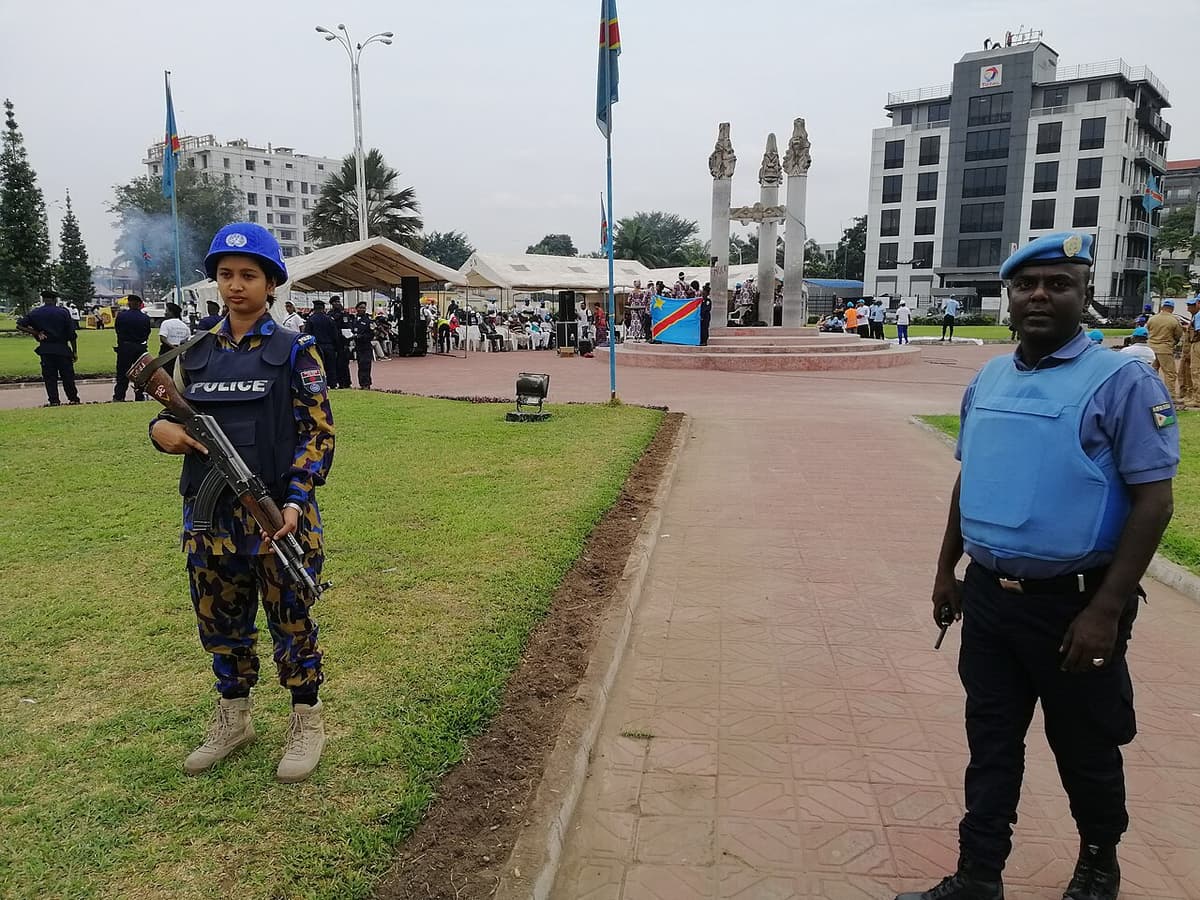
MONUSCO Welcomes 14 New International Police Officers to Strengthen Civilian Protection
Kinshasa, April 9, 2026 - The United Nations Stabilization Mission in the Democratic Republic of the Congo (MONUSCO) has officially welcomed fourteen new Individual Police Officers (IPOs), including six women, following the completion of their initial training aimed at strengthening civilian protection efforts.
The new officers come from eleven contributing countries: Djibouti, Gambia, Togo, Burkina Faso, Cameroon, Côte d’Ivoire, Brazil, Tanzania, Canada, Chad, and Bangladesh.
The closing ceremony of their induction training was marked by remarks from the Head of the UN Police component, Inspector General Mamouna Ouedraogo, who underscored the importance of MONUSCO’s mandate in protecting civilians and supporting the restoration of state authority in the Democratic Republic of the Congo.
She urged the new officers to embody core United Nations values, including discipline, self-control, and teamwork, while maintaining strict professionalism and operational effectiveness in the field.
Ouedraogo also reiterated the UN’s zero-tolerance policy on sexual exploitation and abuse, calling on personnel to uphold the highest ethical standards and avoid any conduct that could harm communities or undermine the mission’s credibility.
Highlighting the operational context in the DRC, she emphasized the expected impact of their deployment on both local populations and MONUSCO’s broader stabilization efforts.
The fourteen officers completed a structured training program designed to equip them with essential skills for their mission. The curriculum, delivered by experienced UN experts, covered a wide range of strategic and operational topics relevant to peacekeeping policing duties.
Conclusion
The first half of April 2026 was defined by a major democratic milestone and the continued expansion of Djibouti’s strategic infrastructure. The period was marked by the re-election of President Ismail Omar Guelleh and significant international partnerships aimed at long-term economic resilience.
Political Stability and Electoral Outcomes
The national political landscape was dominated by the presidential election held on April 10.
Decisive Re-election: President Ismail Omar Guelleh secured a fifth term with 97.81% of the vote, defeating challenger Mohamed Farah Samatar.
International Recognition: Delegations from the African Union, IGAD, and the OIC observed the process, and world leaders from France, Somalia, and Saudi Arabia extended congratulations, praising the election's transparency.
National Cohesion: Following his concession, Samatar met with President Guelleh at the Presidential Palace to wish him success, a gesture presented by officials as a sign of political maturity.
Mourning of a Political Figure: Earlier in the month, the nation mourned the passing of Ali Mohamed Daoud, president of the FRUD, leading to a temporary three-day suspension of the presidential campaign.
Economic Development and Infrastructure
Djibouti made substantial progress in its ambition to become a regional maritime and technological hub.
Maritime Advancement: The inauguration of the €107.5 million Djibouti Ship Repair Yard (DSRY) near the Bab el-Mandeb Strait provides the region with its largest floating dock, expected to generate up to 1,750 direct and indirect jobs.
Water Security: A $36.5 million agreement with the World Bank was signed to increase national drinking water coverage to 98% by 2030. Additionally, the Douda wastewater treatment plant expansion was highlighted during a French diplomatic visit.
Innovation in AI: A joint initiative with Somalia saw the launch of the Somali-Language AI & Innovation Lab (SAIL), focusing on using deep learning to detect fake news in the Somali language.
Related reading
Politics - 31 August 2026
Angolan President Warns Eastern DRC Conflict Could Spill Across Great Lakes
Kinshasa, August 31, 2026 - Angolan President Joao Lourenco warned that the long-running conflict in eastern DRC could have effects across the Great Lakes region, adding diplomatic weight to calls for stronger…
By Amina Kabasele - 3 min read
Politics - 31 August 2026
Rwanda Rejects Ethnic Framing In Uganda Military Chief's Remarks
Kigali, August 31, 2026 - Rwanda pushed back against social-media remarks attributed to Uganda's Chief of Defence Forces, Gen.
By Amina Kabasele - 2 min read
Politics - 31 August 2026
African Union Backs Sudan Dialogue Plan As Civilian Blocs Object
Khartoum, August 31, 2026 - The African Union endorsed a new Sudanese dialogue initiative aimed at ending the civil war, but major civilian and political groups rejected the move as premature and potentially favorable…
By Amina Kabasele - 2 min read