
Politics - 8 February 2026
Implementation Struggles Seven Months After Signing, Overall Rate Stagnates at 23.3%
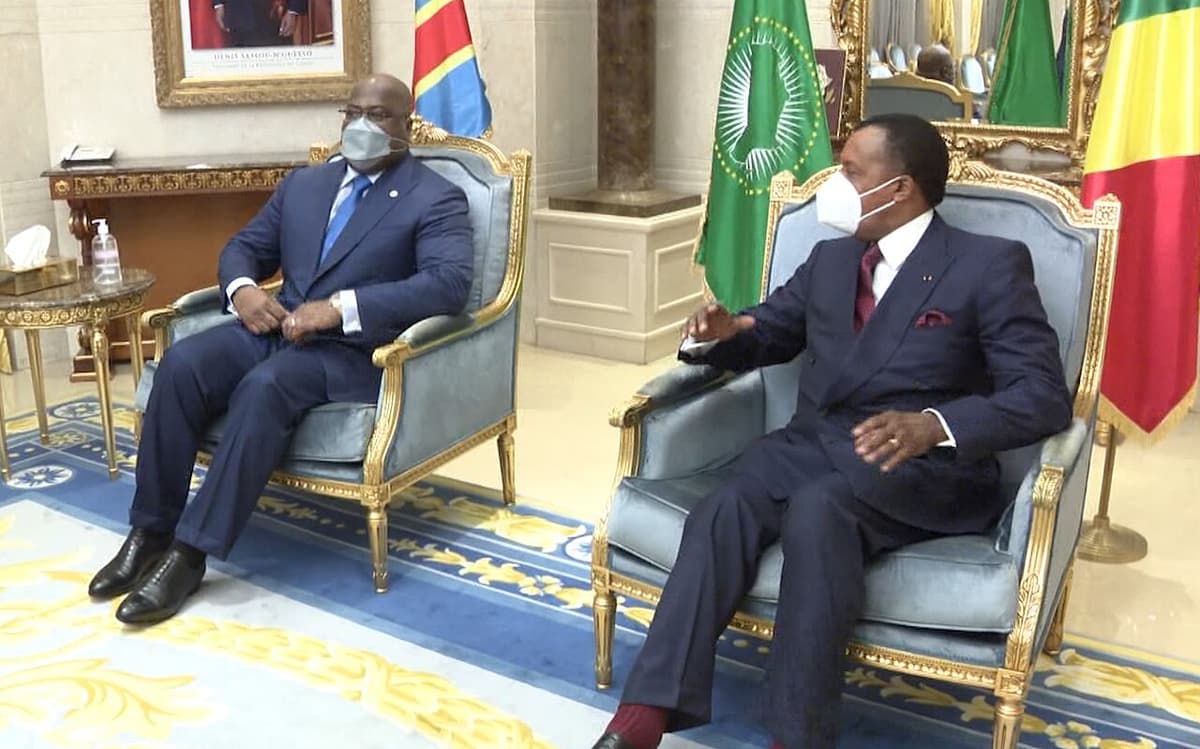
Washington Agreement, February 2, 2026 - Seven months after the signing of the Washington Agreement between the Democratic Republic of Congo (DRC) and Rwanda, implementation continues to face serious challenges, with an overall implementation rate remaining unchanged at 23.3%, according to a recent report by the African Peace Agreements Barometer.
The agreement, signed under the auspices of the Trump administration, was intended to address the ongoing conflict in eastern DRC and the activities of the Rwandan-backed AFC/M23 rebellion, which continues territorial operations in North Kivu and South Kivu.
The report highlights that the main positive developments between January 1 and 31, 2026, include:
High-level meeting in Lomé (January 16-17) to consolidate peace processes in the DRC and the Great Lakes region and adopt a new AU mediation architecture.
Regional tour of the AU Mediator and the Panel of Facilitators, operationalizing the new mediation framework.
Extraordinary meeting of ICGLR defense experts in Livingstone (January 8-10) to review the deteriorating security situation in eastern DRC.
President João Lourenço’s consultations with Congolese political, military, and religious actors to relaunch inclusive political dialogue.
U.S. Congressional hearings (January 22) to assess the Washington Agreement’s implementation.
Withdrawal of AFC/M23 from Uvira.
Despite these steps, the report identifies persistent challenges, including:
Intensification of hostilities in eastern DRC.
Failure to neutralize the FDLR.
Continued Rwandan defensive measures.
Obstacles to effective humanitarian aid delivery.
Recommendations were made to key stakeholders:
To the U.S. Government:
Maintain and strengthen coordinated diplomatic and political pressure on DRC and Rwanda.
Use targeted coercive measures against actors obstructing implementation, if necessary.
To the Congolese Government:
Accelerate operations to neutralize the FDLR.
Consider MONUSCO involvement in areas under AFC/M23 control.
Provide assurances that no FDLR members are integrated into FARDC.
Promote structured and inclusive political dialogue beyond security issues.
To the Rwandan Government:
Implement disengagement and lifting of defensive measures.
Provide credible security/legal guarantees to FDLR members for voluntary repatriation.
Encourage AFC/M23 not to obstruct MONUSCO operations targeting FDLR.
To the Qatari Government:
Resume the Doha peace process, currently stalled since mid-November 2025.
To the African Union and AU mediator:
Adopt a formal framework linking Washington and Doha commitments.
Finalize methodological instruments and operational tools for the Panel of Facilitators.
Clarify the relationship between President Lourenço’s consultations and the Washington/Doha processes.
Ensure independent funding for the Panel of Facilitators and Joint Secretariat.
Despite the involvement of US President Donald Trump, progress on the ground remains slow. Kinshasa and Kigali are struggling to coordinate effectively, while Doha talks with the AFC/M23, under Qatari mediation, have yet to produce concrete results, particularly regarding the restoration of state authority and reintegration of armed groups.
The report underscores that, seven months post-signing, the Washington Agreement faces persistent implementation gaps, leaving the eastern DRC security situation fragile and the population exposed to ongoing violence.
Related reading

Politics - 31 August 2026
Angolan President Warns Eastern DRC Conflict Could Spill Across Great Lakes
Kinshasa, August 31, 2026 - Angolan President Joao Lourenco warned that the long-running conflict in eastern DRC could have effects across the Great Lakes region, adding diplomatic weight to calls for stronger…
By Amina Kabasele - 3 min read

Politics - 31 August 2026
Rwanda Rejects Ethnic Framing In Uganda Military Chief's Remarks
Kigali, August 31, 2026 - Rwanda pushed back against social-media remarks attributed to Uganda's Chief of Defence Forces, Gen.
By Amina Kabasele - 2 min read
Politics - 31 August 2026
African Union Backs Sudan Dialogue Plan As Civilian Blocs Object
Khartoum, August 31, 2026 - The African Union endorsed a new Sudanese dialogue initiative aimed at ending the civil war, but major civilian and political groups rejected the move as premature and potentially favorable…
By Amina Kabasele - 2 min read