
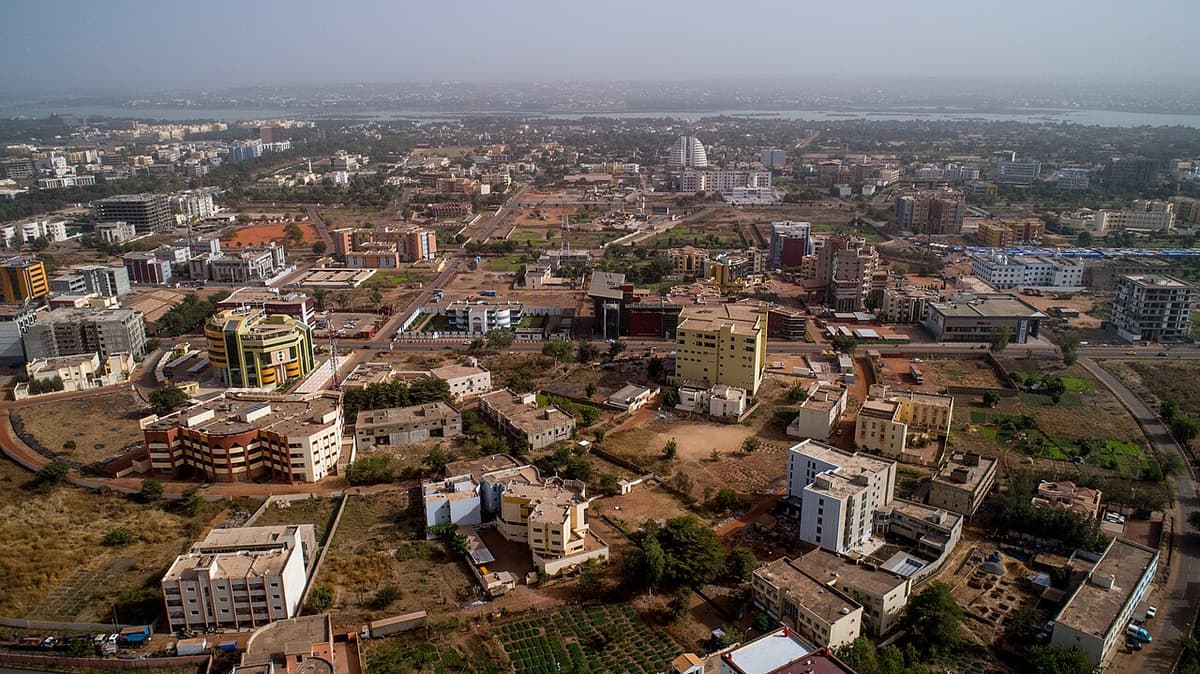
Justice - 27 April 2026
Security and Civil Developments Reported Across Mali (April 19-24, 2026)
Bamako, April 22, 2026 - Koulikoro Region (Bamako outskirts)
Local sources reported that fighters from the Group for the Support of Islam and Muslims (JNIM) entered the courtyard of a school in the village of Marka-Kongo, located approximately 78 kilometers from Bamako. According to these accounts, the armed individuals ordered the school to close before leaving the area. No casualties were reported.
April 19-ongoing - Mopti and Sévaré
Residents of Mopti and Sévaré have reported recurring power outages amid an intense heat wave exceeding 40°C. The electricity disruptions have further strained living conditions in the two central Malian cities, with no official explanation immediately confirmed regarding the cause of the outages.
April 22, 2026 - Tessit (Gao Region)
In the Gao region near the Niger border, fighters from the Islamic State in the Greater Sahara (ISGS) launched a surprise attack on the town of Tessit. Reports indicate that the attackers briefly took control of the military camp before government forces withdrew and later returned with reinforcements, including elements from local militias affiliated with the Movement for the Salvation of Azawad (MSA). The attackers reportedly withdrew, leaving behind two motorcycles.
April 24, 2026 - Gao Region (Hourara area)
The Malian Armed Forces carried out drone strikes in the Hourara area near the Niger border. According to available reports, the operation did not result in casualties or significant material damage.
Conclusion
Mali Faces a Critical Juncture Amid Diplomatic Progress and Escalating Security Crisis
The period from April 12 to 27, 2026, reflects a moment of sharp duality in Mali’s trajectory, marked by notable diplomatic and economic advances alongside a rapid and far-reaching deterioration of the security environment.
On one hand, the transitional authorities pursued an active diplomatic agenda, consolidating and expanding international partnerships through the accreditation of new ambassadors from key partners including the European Union, Ghana, Qatar, and Cuba. This outreach was complemented by deeper regional coordination within the Confederation of Sahel States (AES), particularly in areas such as media regulation, cultural cooperation, and shared sovereignty frameworks.
At the same time, domestic reforms continued to progress in several strategic sectors. The government advanced infrastructure financing through a standardized public-private partnership framework, strengthened protections for cultural heritage through the recognition of Bogolan as a protected geographical indication, and supported increased academic and scientific cooperation with international partners. In parallel, improvements in regional mobility were noted following Morocco’s suspension of electronic travel authorization requirements for Malian citizens.
However, these developments were rapidly overshadowed by a severe escalation in insecurity.
A coordinated multi-city offensive on April 25 marked a turning point, with simultaneous attacks reported across major urban and strategic centers including Bamako, Kidal, Gao, and Sévaré. These events were accompanied by competing claims of territorial control, particularly in northern Mali, where conflicting narratives emerged regarding the situation in Kidal and other key locations.
The crisis was further compounded by reports of high-level political and military instability, including the death of the Minister of Defense, Lieutenant General Sadio Camara, following an attack in the capital, and uncertainty surrounding the public status of the head of state. These developments have intensified perceptions of institutional fragility at a critical moment.
Beyond the core conflict zones, tensions also extended to Mali’s borders, with reported military movements near Mauritania contributing to regional diplomatic strain. At the same time, the detention of humanitarian personnel in Gao added further complexity to an already constrained humanitarian operating environment.
In summary, Mali enters a highly uncertain phase in which diplomatic diversification and institutional reform efforts are being tested by an unprecedented multi-front security crisis. The immediate outlook will depend on the state’s capacity to reassert territorial control, stabilize political leadership, and manage escalating regional and humanitarian pressures, while the broader effectiveness of regional security cooperation mechanisms remains under significant strain.
By Maïga Sidi Bonkana
(Boukari Zankey Sidi)
Jeff Buleli
Related reading

Justice - 31 August 2026
Police Detain Officers Over Dress-Related Arrest In Rubavu
Kigali, August 31, 2026 - Rwanda National Police detained two officers after a video showed them arresting a young woman at Rubavu bus station over the length of her dress, a case that intensified public scrutiny of…
By Amina Kabasele - 2 min read
Justice - 31 August 2026
Military Intelligence Detains Doctors Union Leader During Disease Fieldwork
Khartoum, August 31, 2026 - Sudanese Military Intelligence detained Dr Attiya Abdallah, the head of the country's main doctors' union, in a case that highlights mounting pressure on medical and humanitarian workers…
By Amina Kabasele - 2 min read
Justice - 31 August 2026
UN Demands Release Of Detained Aid Workers In Sudan
Khartoum, August 31, 2026 - The United Nations called for the immediate and unconditional release of humanitarian workers detained by armed groups in Sudan, warning that arbitrary arrests are obstructing relief…
By Amina Kabasele - 2 min read