
Economy - 13 June 2026
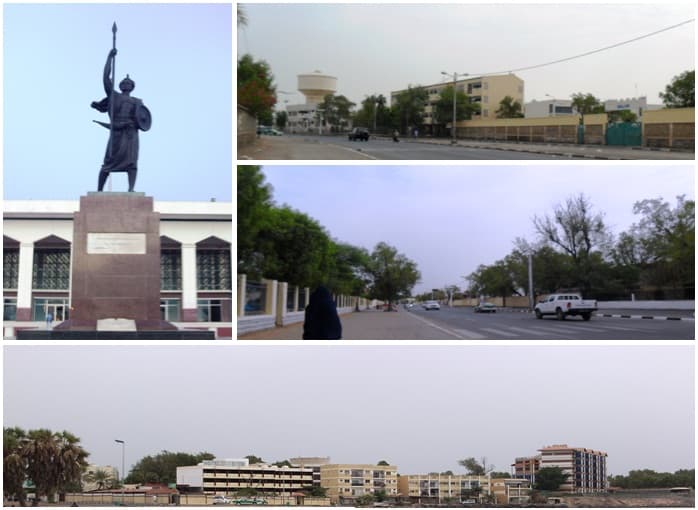
Djibouti Government Reviews Key Reforms and Economic Performance at Council of Ministers
Djibouti, June 10, 2026 - Under the chairmanship of President Ismaïl Omar Guelleh, Head of Government, the 6th session of the Council of Ministers was held on June 9, 2026, focusing on a wide range of legislative, economic, institutional, and social reforms across key sectors of national development.
At the opening of the session, the Head of State expressed gratitude to the Djiboutian population, government members, and international partners for their support following the death of Madame Nazli Abdallah Mohamed Kamil, offering prayers for the deceased.
The Council reviewed and approved several draft laws and decrees presented by various ministries, covering public enterprises, social protection systems, justice reforms, education policy, and public land allocation.
From the Ministry of Energy and Natural Resources, the Council approved the financial statements of Electricité de Djibouti (EDD) for the 2024 fiscal year. The utility reported revenues of over 41.9 billion FDJ and expenses of approximately 40.5 billion FDJ, resulting in a surplus of 1.46 billion FDJ. Officials noted increased electricity demand in Djibouti City, alongside rising operating costs and continued investment in energy production, including interconnection, diesel, and wind power.
The Ministry of Labor and Social Protection presented the 2023 financial accounts of the National Social Security Fund (CNSS), which recorded a surplus of 3.58 billion FDJ. While slightly lower than the previous year, the institution maintained stable revenues supported by contributions and financial income, alongside ongoing investments in infrastructure projects, including preparations related to a new hospital.
In the justice sector, the Council examined a decree acknowledging the resignation of magistrate Issam Kalid Abdallah and a separate decree authorizing him to practice law, in accordance with national legal provisions.
The Ministry of Higher Education and Research announced the appointment of Dr. Madina Daher Okiye as President of the University of Djibouti, replacing Dr. Djama Mohamed Hassan, marking a leadership transition within the country’s principal academic institution.
The Ministry of National Education extended for five years the legal framework governing the “High School Graduation Certificate,” a qualification designed for international and specialized education institutions. The measure aims to maintain continuity for programs such as those at the Horn of Africa School while supporting inclusive education policies, including for refugee students.
Related reading

Economy - 31 August 2026
Rwanda Reclaims Undeveloped Industrial Plots To Improve Land Use
Kigali, August 31, 2026 - Rwanda reclaimed 15 additional industrial plots from investors that failed to develop them within agreed timelines, reinforcing the government's push to ensure scarce industrial land is put to…
By Jean-Marc Okito - 2 min read

Economy - 31 August 2026
High Costs And Information Gaps Slow Solar Uptake Among Farmers
Kampala, August 31, 2026 - High upfront costs and limited information are holding back adoption of solar technologies among Uganda's smallholder farmers, constraining productivity and post-harvest management.
By Jean-Marc Okito - 3 min read
Economy - 31 August 2026
Parliament Cafeteria Closure Exposes Procurement Dispute Over Shs2 Billion Food Deal
Kampala, August 31, 2026 - A procurement dispute over a Parliament catering contract worth between Shs1.3 billion and Shs2 billion has disrupted cafeteria services for lawmakers and staff.
By Jean-Marc Okito - 2 min read