
Politique - 8 février 2026
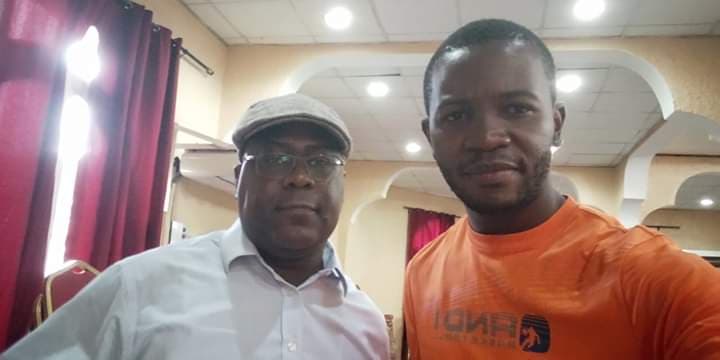
President Félix Tshisekedi Reaffirms Commitment to Inclusive and Peaceful Dialogue
Kinshasa, le 8 février 2026 - On Saturday, January 31, President Félix Tshisekedi reaffirmed his openness to dialogue among Congolese citizens, during a New Year’s greetings ceremony with ambassadors and diplomats accredited to the DRC in Kinshasa.
“In this context, national unity is more essential than ever. That is why we reaffirm our openness to a peaceful and inclusive dialogue, resolutely aimed at consolidating national cohesion, without ever calling into question the institutions established through universal suffrage,” he declared.
The Head of State emphasized that any such dialogue would take place on national soil and be organized by the institutions of the Republic, in accordance with the Constitution, the laws of the Republic, and democratic principles.
He stressed that this process cannot serve to downplay aggression or dilute responsibilities.
“Justice will take its normal course, rigorously, to the very end, and without leniency, in order to honor the memory of those unjustly killed,” he said.
On this occasion, the President called on the international community to take concrete action to protect the country’s sovereignty and support peace efforts. He reiterated his refusal to negotiate with the perpetrators of crimes committed against the Congolese people.
He also pointed to recent remarks by a Rwandan diplomat before the U.S. Congress, officially acknowledging security cooperation between Rwanda and the AFC/M23 rebellion, saying this confirms the DRC’s position and must be taken seriously by the international community.
“This recognition is not a mere communication ploy, nor a political strategy. It sheds a harsh light on what numerous reports and multiple partners have long been pointing out: the existence of decisive support for an armed insurgent movement operating on the sovereign territory of the Democratic Republic of Congo,” he added.
He concluded by stating that no cause, narrative, or security justification can legitimize occupation, parallel administrations, forced displacement, or the plundering of resources to the detriment of a United Nations member state.
Faits rapportés
On Saturday, January 31, President Félix Tshisekedi reaffirmed his openness to dialogue among Congolese citizens, during a New Year’s greetings ceremony with ambassadors and diplomats accredited to the DRC in Kinshasa.
“In this context, national unity is more essential than ever. That is why we reaffirm our openness to a peaceful and inclusive dialogue, resolutely aimed at consolidating national cohesion, without ever calling into question the institutions established through universal suffrage,” he declared.
The Head of State emphasized that any such dialogue would take place on national soil and be organized by the institutions of the Republic, in accordance with the Constitution, the laws of the Republic, and democratic principles.
He stressed that this process cannot serve to downplay aggression or dilute responsibilities.
“Justice will take its normal course, rigorously, to the very end, and without leniency, in order to honor the memory of those unjustly killed,” he said.
On this occasion, the President called on the international community to take concrete action to protect the country’s sovereignty and support peace efforts. He reiterated his refusal to negotiate with the perpetrators of crimes committed against the Congolese people.
He also pointed to recent remarks by a Rwandan diplomat before the U.S. Congress, officially acknowledging security cooperation between Rwanda and the AFC/M23 rebellion, saying this confirms the DRC’s position and must be taken seriously by the international community.
“This recognition is not a mere communication ploy, nor a political strategy. It sheds a harsh light on what numerous reports and multiple partners have long been pointing out: the existence of decisive support for an armed insurgent movement operating on the sovereign territory of the Democratic Republic of Congo,” he added.
He concluded by stating that no cause, narrative, or security justification can legitimize occupation, parallel administrations, forced displacement, or the plundering of resources to the detriment of a United Nations member state.
À lire aussi
Politique - 31 août 2026
Le Président angolais met en garde contre le risque d'un conflit dans l'est de la RDC s'étendant à la région des Grands Lacs
Kinshasa, le 31 août 2026 - Le Président angolais Joao Lourenco a averti que le conflit de longue date dans l'est de la RDC pourrait avoir des répercussions dans la région des Grands Lacs, ajoutant un poids diplomatique…
Par Amina Kabasele - 3 min de lecture
Politique - 31 août 2026
Le Rwanda rejette le cadrage ethnique des remarques du chef militaire ougandais
Kigali, le 31 août 2026 - Le Rwanda a réagi aux remarques sur les réseaux sociaux attribuées au chef des forces de défense de l'Ouganda, le général Muhoozi Kainerugaba, après que la porte-parole du gouvernement, Yolande…
Par Amina Kabasele - 2 min de lecture
Politique - 31 août 2026
L'Union africaine soutient le plan de dialogue soudanais alors que des blocs civils s'y opposent
Khartoum, le 31 août 2026 - L'Union africaine a approuvé une nouvelle initiative de dialogue soudanais destinée à mettre fin à la guerre civile, mais d'importants groupes civils et politiques ont rejeté cette démarche…
Par Amina Kabasele - 2 min de lecture