
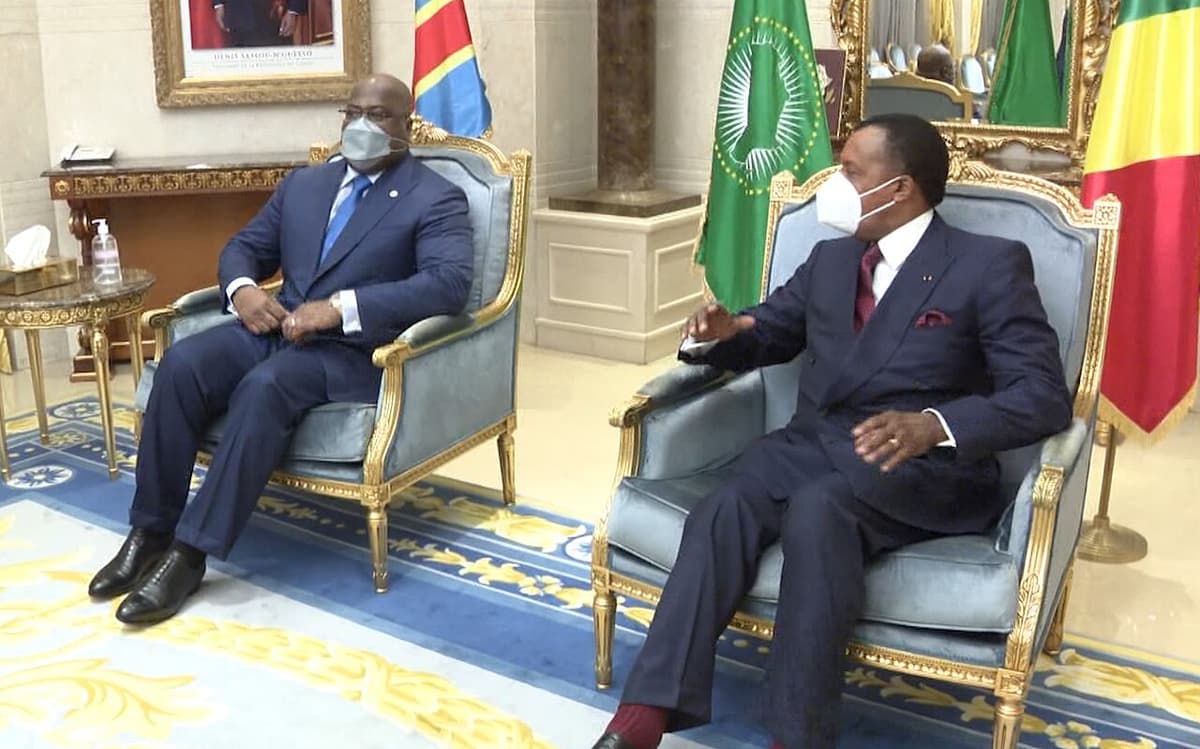
Sécurité - 11 janvier 2026
La taille de la RDC utilisée comme prétexte à l'échec de Tshisekedi à protéger les citoyens
Kigali, le 4 janvier 2026 - La taille immense de la République Démocratique du Congo (RDC) est de plus en plus utilisée comme prétexte pour justifier l'incapacité persistante du président Félix Tshisekedi à garantir la sécurité du peuple congolais. Alors que l'insécurité continue de s'aggraver dans l'est de la RDC, en particulier dans la région du Kivu, des responsables de haut niveau ont répété que l'immensité du territoire du pays est responsable de décennies d'instabilité.
Un récit récurrent parmi les dirigeants de la RDC est que le Congo est tout simplement trop grand pour être gouverné efficacement. Cet argument a été fréquemment invoqué par le président Tshisekedi pour expliquer la violence persistante. En 2022, il a publiquement affirmé que les défis sécuritaires du pays découlaient de sa taille, insistant sur le fait que l'armée nationale ne pouvait pas être déployée partout pour lutter contre des groupes armés tels que les ADF, une milice ougandaise liée à l'État islamique, et d'autres insurgés opérant sur le sol congolais.
Malgré un effectif d'environ 130 000 soldats, les FARDC souffrent d'un moral bas, d'une formation inadéquate, de structures de commandement faibles, de discrimination ethnique, de corruption et de l'intégration des FDLR, une milice rwandaise responsable du génocide de 1994 contre les Tutsis, intégrée sous l'autorité de Tshisekedi.
La dépendance de Tshisekedi vis-à-vis des troupes burundaises, de la milice Wazalendo, des mercenaires européens et des forces de la SADC a progressivement diminué, en particulier après que l'Afrique du Sud, le Malawi et la Tanzanie ont retiré leurs contingents suite à des revers militaires contre l'AFC/M23.
Certains analystes se demandent maintenant si Tshisekedi avait pleinement compris l'immensité du territoire congolais avant d'assumer ses fonctions, lorsqu'il a promis de rétablir la sécurité à l'échelle nationale, ou si cette réalité ne lui est apparue qu'après avoir pris le pouvoir. D'autres remettent ouvertement en question ses véritables intentions concernant l'intégrité territoriale du pays, se demandant si une réduction de la taille pourrait mieux servir ses intérêts politiques.
Comme le dit le proverbe, un leader est celui qui connaît le chemin, emprunte le chemin et montre le chemin. La conduite de Tshisekedi et de son cercle rapproché suggère que la crise dans l'est de la RDC est de peu de préoccupation, tant que Kinshasa reste intacte.
Dans une déclaration publiée le 26 novembre, le porte-parole du gouvernement, Patrick Muyaya, a affirmé que les régions du Kivu touchées par l'insécurité ne représentent qu'une petite portion de la RDC.
"Que signifie vraiment 2 345 000 kilomètres carrés ?" a-t-il demandé, ajoutant que les étrangers exagèrent souvent le conflit en disant : "Il y a la guerre en RDC", tandis que les visiteurs de Kinshasa sont surpris de trouver le calme dans la capitale.
De telles remarques ont renforcé la perception que l'administration Tshisekedi n'a jamais priorisé le bien-être des populations de l'est de la RDC.
En 2025, le général de brigade Eddy Kapend, commandant de la 22e région militaire, a déclaré ouvertement que le pays n'était pas concerné par l'occupation de certaines parties de l'est de la RDC par des combattants de l'AFC/M23, soulignant plutôt que le véritable problème serait leur présence dans la province du Katanga. Il a en outre noté qu'il n'y avait pas de préoccupations majeures tant que le Katanga restait intact.
Cette même année, Anthony Nkinzo Kamole, chef de cabinet de la présidence, a déclaré lors d'une interview que le conflit dans l'est de la RDC se déroulait à 2 000 kilomètres, décrivant les régions orientales comme des "zones étrangères", tandis que Kinshasa était considérée comme leur pays.
Ces déclarations font écho à des remarques similaires faites par Tshisekedi, Muyaya, le général Kapend, Nkinzo et d'autres, y compris Jules Alingete, le vérificateur général, qui a un jour déclaré que la guerre était à 2 000 kilomètres de Kinshasa et que "nous ne la voyons que à la télévision". De telles opinions soulignent un profond décalage par rapport aux réalités auxquelles sont confrontées les populations de l'est.
Au-delà de l'argument de la taille territoriale, une autre stratégie fréquente a été de blâmer le Rwanda pour tous les problèmes, permettant au gouvernement congolais d'éviter de reconnaître ses propres échecs.
L'est de la RDC est devenu un champ de bataille pour plus de 260 groupes armés, entraînant des milliers de morts civiles, des viols massifs, le recrutement forcé d'enfants et le déplacement de millions de personnes, tant à l'intérieur qu'à l'extérieur du pays.
Tshisekedi a encore aggravé la crise en armant des groupes accusés de graves violations des droits de l'homme pour soutenir les FARDC contre l'AFC/M23, un mouvement qui prétend lutter contre le génocide des Tutsis congolais prétendument perpétré par le gouvernement de Kinshasa.
Les FDLR, qui ont envahi le Rwanda en 1994, continuent d'être profondément enracinés au sein de l'armée congolaise et sont activement impliqués dans l'armement du mouvement Wazalendo, principalement civil.
À ce jour, Tshisekedi n'a montré aucune volonté politique claire de mettre fin à la guerre ou de rétablir la paix. Il semble largement indifférent au sort des réfugiés congolais et des civils qui continuent de risquer leur vie quotidiennement au milieu du conflit.
Abrité à plus de 2 000 kilomètres des lignes de front, le président a répété de minimiser la crise en arguant que les zones touchées sont trop petites pour avoir de l'importance. Les critiques soutiennent qu'il utilise désormais la guerre dans l'est de la RDC comme un outil politique, exploitant l'instabilité persistante pour justifier l'extension de son emprise sur le pouvoir.
À lire aussi
Sécurité - 31 août 2026
RDC et Congo-Brazzaville s'efforcent de désamorcer le conflit frontalier sur le fleuve Congo
Kinshasa, le 31 août 2026 - La RDC et le Congo-Brazzaville ont agi pour contenir les tensions après un affrontement mortel du 28 août entre les troupes des FARDC et les forces du Congo-Brazzaville sur le fleuve Congo…
Par Amina Kabasele - 3 min de lecture
Sécurité - 31 août 2026
Des villages de Walikale vidés alors que les combats se propagent dans l'est de la RDC
Goma, le 31 août 2026 - Plusieurs villages du groupement Waloa Loanda de Walikale ont été vidés alors que les combats entre l'armée et les forces AFC/M23 se sont étendus des zones voisines de Masisi et Kalehe…
Par Amina Kabasele - 3 min de lecture
Sécurité - 31 août 2026
Le gouvernement affirme que l'armée bloque l'expansion de l'AFC/M23 au Kivu
Kinshasa, le 31 août 2026 - Le gouvernement a déclaré que les FARDC faisaient systématiquement échouer les tentatives de l'AFC/M23 d'occuper de nouveaux territoires dans les Kivus, alors que les combats se poursuivaient…
Par Amina Kabasele - 3 min de lecture