
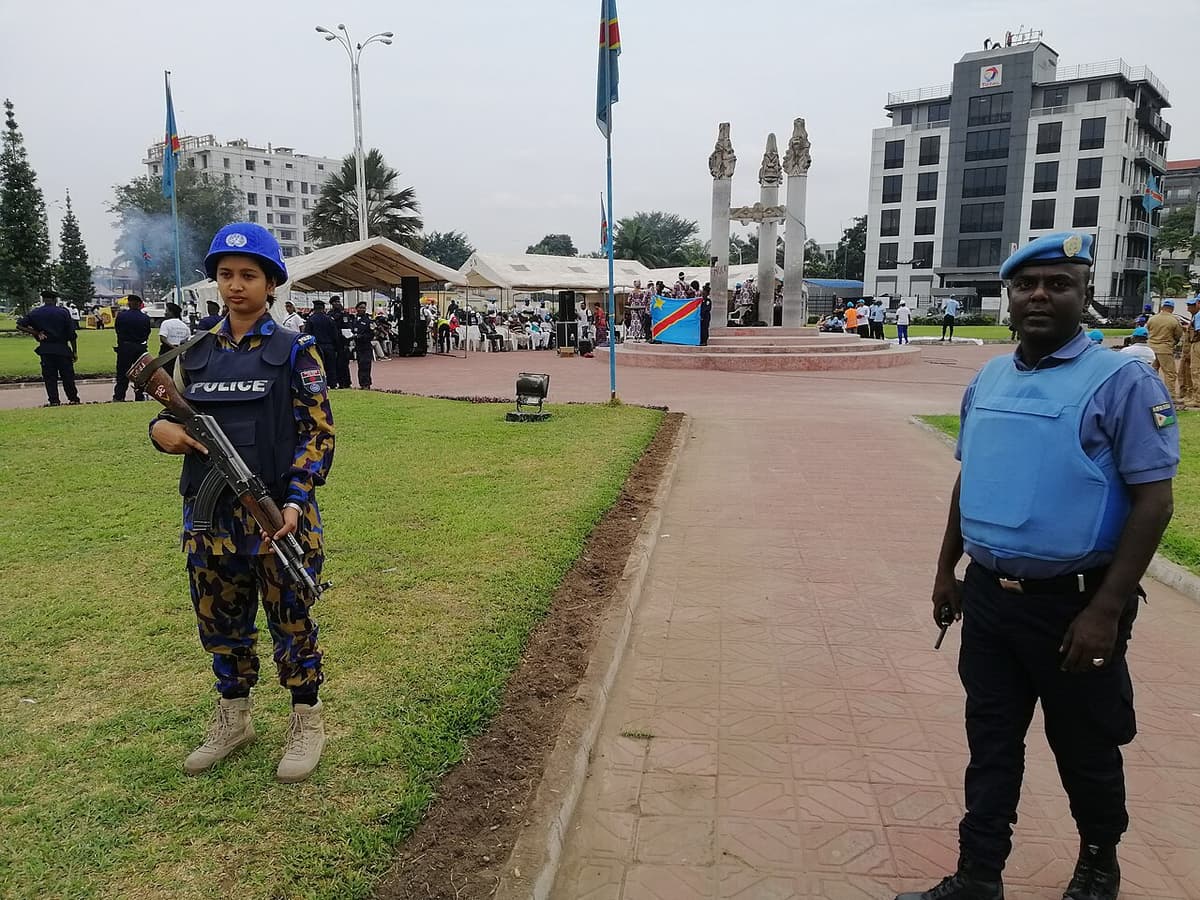
Sécurité - 13 décembre 2025
Le gouvernement de la RDC accusé de maintenir des liens avec les FDLR malgré des promesses de démantèlement
Kinshasa, le 13 décembre 2025 - Kinshasa, RDC - Malgré des déclarations depuis le 10 octobre 2025 affirmant que les FDLR seraient démantelés, des preuves suggèrent que le gouvernement de la RDC continue de soutenir le groupe, soulevant des inquiétudes quant à l'insécurité régionale persistante.
Les FDLR, accusés d'avoir participé au génocide de 1994 contre les Tutsi, ont été formés en 2000 par des restes de l'armée des Ex-FAR, des Interahamwe, des politiciens et des réfugiés rwandais restant en RDC. Depuis mai 2022, les FDLR sont directement impliqués dans des opérations contre le M23, en coalition avec l'armée de la RDC et des groupes tels que Wazalendo.
Le gouvernement rwandais a à plusieurs reprises averti la communauté internationale que les FDLR reçoivent un soutien du gouvernement de la RDC, y compris en matériel, formation militaire et nourriture, permettant au groupe de renforcer ses opérations.
Le 27 juin 2025, le Rwanda et la RDC, avec l'aide des États-Unis, ont signé un accord de paix, qui incluait la destruction des FDLR, tandis que le Rwanda a accepté de lever certaines mesures de sécurité. La déclaration militaire de la RDC du 10 octobre a appelé les combattants des FDLR à désarmer et a ordonné aux militaires et civils congolais de cesser de collaborer avec le groupe, conformément à l'accord de Washington.
Cependant, un rapport d'experts de l'ONU publié le 8 décembre 2025 a révélé que l'annonce avait tendu les relations entre l'armée de la RDC et les combattants des FDLR, provoquant la colère des groupes alliés Wazalendo. Le rapport indiquait que certains officiers de l'armée de la RDC et des représentants du gouvernement avaient assuré aux FDLR que la coopération se poursuivrait en raison du rôle significatif du groupe dans les opérations en cours, notant que les FARDC manquent de la capacité de le démanteler.
Des sources fiables indiquent que le 29 novembre 2025, l'armée de la RDC a livré des munitions et de la nourriture aux FDLR et aux groupes alliés, y compris le NDC-R et Nyatura, dans des zones telles que Bibwe et Hembe, suivant des ordres du Colonel Salomon Tokolonga, commandant du 3402e Régiment de l'Armée de la RDC.
Le Col. Tokolonga, déjà sur la liste des sanctions des États-Unis, a un passé de soutien aux FDLR et à d'autres groupes armés responsables d'atrocités contre des civils.
La période du 1er au 14 décembre 2025 a été marquée par un paradoxe frappant entre des avancées diplomatiques majeures et une escalade rapide et violente du conflit régional.
Le développement diplomatique central a été la signature de l'Accord de paix et de coopération économique RDC-Rwanda à Washington, D.C., le 4 décembre 2025. L'accord a établi un large cadre pour la stabilité régionale, engageant les deux parties à démanteler les groupes armés, notamment les FDLR, et à des initiatives économiques conjointes telles que le projet hydroélectrique Rusizi III.
Pourtant, ce cadre nouvellement établi a été immédiatement mis à l'épreuve - et affaibli - par une résurgence aiguë des combats dans le Nord et le Sud Kivu, y compris la capture de zones stratégiques par la coalition AFC/M23. L'escalade a déclenché des accusations mutuelles de violations du cessez-le-feu, sapant à la fois l'accord de Washington et la trêve médiée par le Qatar. Kigali a accusé le Burundi de déployer plus de 20 000 troupes et de contribuer à l'instabilité dans le Sud Kivu, tandis que la violence renouvelée a poussé plus de 750 réfugiés congolais vers le Rwanda. Dans le même temps, des rapports alléguant une coordination continue entre certains éléments des FARDC et les FDLR contredisaient directement les engagements pris à Washington.
En fin de compte, bien qu'une base juridique et politique critique pour la coopération régionale ait été posée, le retour rapide aux hostilités, le non-respect persistant et les dynamiques de proxy continuent de souligner la fragilité du processus de paix. La stabilité durable dans la région des Grands Lacs dépendra non seulement des accords signés, mais aussi d'actions vérifiables, d'une volonté politique soutenue et d'un strict respect des engagements de toutes les parties impliquées.
À lire aussi
Sécurité - 31 août 2026
RDC et Congo-Brazzaville s'efforcent de désamorcer le conflit frontalier sur le fleuve Congo
Kinshasa, le 31 août 2026 - La RDC et le Congo-Brazzaville ont agi pour contenir les tensions après un affrontement mortel du 28 août entre les troupes des FARDC et les forces du Congo-Brazzaville sur le fleuve Congo…
Par Amina Kabasele - 3 min de lecture
Sécurité - 31 août 2026
Des villages de Walikale vidés alors que les combats se propagent dans l'est de la RDC
Goma, le 31 août 2026 - Plusieurs villages du groupement Waloa Loanda de Walikale ont été vidés alors que les combats entre l'armée et les forces AFC/M23 se sont étendus des zones voisines de Masisi et Kalehe…
Par Amina Kabasele - 3 min de lecture
Sécurité - 31 août 2026
Le gouvernement affirme que l'armée bloque l'expansion de l'AFC/M23 au Kivu
Kinshasa, le 31 août 2026 - Le gouvernement a déclaré que les FARDC faisaient systématiquement échouer les tentatives de l'AFC/M23 d'occuper de nouveaux territoires dans les Kivus, alors que les combats se poursuivaient…
Par Amina Kabasele - 3 min de lecture